Camera Imx296 integrating RDK X5

Hello. I’m working with RDK X5 V1.0, SDK V1.1.2, and integrating the Sony IMX296 in 1456×1088 mode, RAW10, 60 fps, 1 lane, 1188 Mbps, I2C bus 6 / 0x1a, MIPI RX0 / PHY0. At the low level, everything works: IMX296 is detected, sensor_start is successful, MIPI HS reception is successful, SIF/VIN consistently receive RAW10 frames at 1456×1088, and srcampy.Camera() now successfully opens the camera and returns NV12 1456×1088 after adding IMX296 to hobot-spdev and fixing VSE. The only remaining issue is at the ISP → NV12/color stage: the image has incorrect color reproduction, for example, B≈255, G≈125, R≈255. At the same time, RAW10 contains the actual scene and changes correctly, meaning the sensor/MIPI/RAW pipeline is working. We also confirmed via dmesg that the ISP loads imx296_tuning.json, but changes to BLS, WB, and CCM.state in the JSON have virtually no effect on the ISP output. Therefore, the main question is: in what specific way should the RDK X5 V1.1.2 ISP8000 be configured and calibrated for the new IMX296 sensor, and which tuning sections should be used?

Despite the fact that IMX296 is not officially supported, we managed to add the sensor to hobot-spdev ourselves. The Camera API now detects IMX296, open_cam() works successfully, and get_img() returns NV12 1456×1088. The only remaining issue is incorrect ISP color reproduction.

I need specific help regarding the ISP8000 calibration workflow: what settings, parameters, or profiles are used for the actual firmware, and how is the correct color output generated for a new Bayer RAW10 sensor?

If the IMX296 already has an external 54 MHz oscillator on the sensor board, is the SoC MCLK from the RDK actually required? Could a “MIPI MCLK not configured” status be considered normal?
Hello.
If the IMX296 sensor board already provides a stable external 54 MHz clock, the message “MIPI MCLK not configured” is normal. In this case, the RDK SoC does not need to provide MCLK.
Based on your current status, we understand that the complete pipeline has already been brought up successfully:
IMX296 → VIN → ISP → VSE → NV12 → Python
The remaining incorrect-color issue is therefore an ISP image-quality tuning problem, rather than a MIPI, VIN, VSE, or Python Camera pipeline problem.
IMX296 does not currently have an internally validated ISP tuning profile. Loading a tuning JSON and changing only BLS, WB, or CCM parameters is not sufficient to produce delivery-quality color output. A new sensor and lens combination requires a complete ISP calibration and tuning process.
The normal process includes:

  1. Sensor and RAW verification
    • Verify sensor initialization and RAW10 data correctness.
    • Confirm Bayer pattern, RAW packing and alignment, black level, exposure and gain characteristics.
    • Confirm that the sensor module, lens and lens coating are finalized and will not be changed.
  2. Laboratory calibration and ISP module tuning
    • Perform sensor-characteristic and ISP initialization calibration, including calibration at 1× gain.
    • Tune BLC, LSC, DPC, demosaic, noise reduction, AEC, AWB, CCM, gamma, edge enhancement and color-space conversion according to the IMX296 and the actual lens module.
    • This requires professional equipment such as a light box and color charts.
  3. Systematic image-quality validation
    • Perform objective laboratory tests, 3A tuning, scene tuning and fine tuning.
    • Validate the image under different illumination levels, color temperatures and real application scenarios.
      This is not a simple configuration change. Reaching delivery-quality image performance normally requires approximately 21 working days or more, considerable ISP engineering experience and several customer validation and feedback rounds.
      Could you please confirm whether you are an individual developer or an enterprise customer?
  • If you are an individual developer, you may try using an AI Agent to assist with the initial RAW verification and ISP parameter debugging. However, final color calibration is difficult without the required equipment and tuning experience.
  • If you are an enterprise customer, we can check whether the project can be referred to a distributor or channel partner that provides ISP tuning services.
    Our internal ISP engineering resources are currently limited, so direct tuning support for an unofficially supported sensor such as IMX296 may be difficult to arrange.
1 Like

Thank you for the clarification. I am an independent developer currently integrating a Sony IMX296 global-sh

We have already completed the sensor and camera pipeline integration. The current pipeline

IMX296 → MIPI CSI-2 → VIN/SIF → ISP → VSE → NV12 → Python Camera API

We have confirmed that:

  • IMX296 is detected correctly;

  • I2C communication works;

  • MIPI CSI-2 reception works;

  • RAW10 frames are captured correctly at 1456×1088;

  • the Bayer configuration has been verified as BAYER_START_B + BAYER_PATTERN_RGGB;

  • srcampy.Camera() successfully opens the sensor at 1456×1088;

  • get_img() successfully returns NV12 frames at 1456×1088;

  • the VSE configuration is working;

  • our sensor board provides a stable external 54 MHz clock, so according to your explanation the RDK SoC does not need to provide MCLK.

The remaining problem is specifically ISP image quality and color calibration.

R=255, G≈125, B=255

We performed several controlled tests. We changed the BLS value, tested different reference tuning JSON files, including SC230AI and IMX477 profiles, and tested both a relative calib_lname and the full path to the tuning file. The ISP output remained essentially unchanged.

We also tested the ISP control API. Sensor

hbn_isp_get_awb_attr()
hbn_isp_get_exposure_attr()
hbn_isp_get_ccm_attr()

return -35 (HBN_STATUS_GET_CONTROL_FAIL).

We can see the calibration filename being passed through the camera/ISI/ISP driver path in dmesg, but we have not been able to confirm that the closed ISP firmware actually loads and applies the contents of the tuning JSON. This is currently the main point we are trying to

I understand that final production-grade ISP calibration requires dedicated equipment and professional experience. At this stage, however, I am mainly looking for guidance on the correct ISP tuning/calibration path for IMX296 on RDK X5, or a reference/effect profile that could be used as a starting point.

Could you please advise whether D-Robotics or one of its authorized distributors or ISP partners can provide an IMX296 reference ISP profile, calibration data, or tuning service for RDK X5?

I would also like to understand the software side of the officially supported camera profiles on RDK X5. For sensors such as IMX219, IMX415, IMX477, IMX586, etc., what ISP/effect/calibration resources are prov

  • tuning JSON files;

  • calibration data;

  • effect libraries;

  • additional ISP profiles or configuration required by the firmware.

In particular, for a sensor that is not officially supported in the current SDK, such as IMX296:

  1. Is a tuning JSON file sufficient for the X5 ISP, or is an additional calibration/effect profile o

  2. Is there an official mechanism for an independent developer to create or obtain an equivalent ISP profile?

  3. Are the -35 IS

  4. Is there an officially supported way to configure the required ISP parameters directly through the hbn_isp_set_* APIs for a custom sensor?

We are not asking for proprietary ISP source code. We mainly want to understand the official calibration/effect-library mechanism and whether an IMX296 ISP profile can be created, obtained, or tuned for RDK X5 V1.1.2.

We have already used an AI coding agent to analyze the public SDK. This helped us complete the initial sensor integration, but we have reached the closed ISP calibration part where we need guidance from D-Robotics.

I would be happy to provide our current RAW samples, sensor configuration, dmesg output, and test results if that would help with the evaluation.

Hello. Thank you for the detailed information.
Since you are an independent developer and your goal is to complete the Python/YOLO/tracking application, we recommend using an officially supported RDK X5 MIPI camera module instead of continuing the IMX296 ISP adaptation.
Your IMX296 sensor and data pipeline are already working. The remaining problem is not a normal driver or pipeline configuration issue—it requires a complete sensor- and lens-specific ISP calibration.
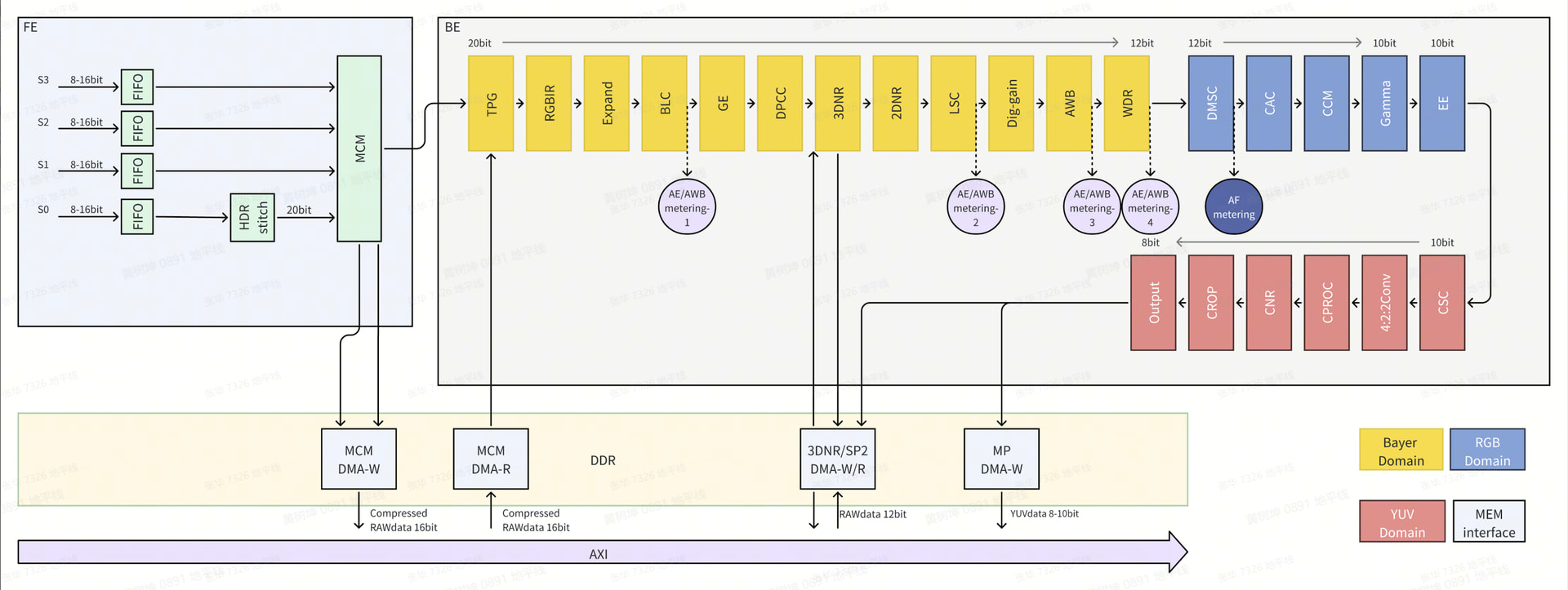
According to the official X5 ISP tuning workflow, image-quality tuning requires:

  • Static calibration using the actual sensor and lens module, including BLC, LSC, CCM, WB and Noise Profile;
  • Calibration Tool to generate the sensor-dependent calibration data;
  • VTunerClient and Tuning Server for dynamic ISP parameter adjustment;
  • Validation using RAW data, light boxes and color charts under multiple lighting conditions;
  • Further 3A and scene-based fine tuning.
    Therefore, using dummy_tuning.json, reusing SC230AI/IMX477 profiles, or changing isolated BLS/WB/CCM fields cannot produce a correct IMX296 result. Parameters from another sensor are not transferable because the calibration data depends on the sensor, lens, optical filter and module characteristics.
    Regarding your specific questions:
  1. A generic tuning JSON is not sufficient. A sensor-specific calibration dataset and complete tuning parameters generated from the actual IMX296 module are required.
  2. The official process uses Calibration Tool, VTunerClient, Tuning Server and Hobotplayer. However, RDK X5 currently does not provide a ready-made IMX296 profile or a complete public IMX296 calibration package.
  3. -35 (HBN_STATUS_GET_CONTROL_FAIL) only means that the ISP control request failed in the current pipeline state. It does not prove whether the JSON was loaded. It may occur when the corresponding ISP control/effect module is not initialized or is unavailable for the current configuration.
  4. The hbn_isp_set_* APIs can adjust exposed runtime ISP parameters after the appropriate ISP algorithm/effect pipeline has been initialized. They cannot replace sensor-dependent calibration or generate a complete IMX296 ISP profile.
    We cannot provide an IMX296 reference tuning profile or commit custom ISP tuning resources for this unsupported sensor. Continuing to replace JSON files or manually adjust individual parameters is unlikely to solve the problem.
    For an independent developer, the practical solution is to use an officially supported RDK X5 MIPI camera module with its matching ISP profile. This will allow you to proceed directly with NV12 output, YOLO detection and tracking.
    You can refer to the public X5 ISP Tuning Guide and VTunerClient Guide for the complete calibration workflow.
1 Like